Winning Colors is NOT a roan!
|
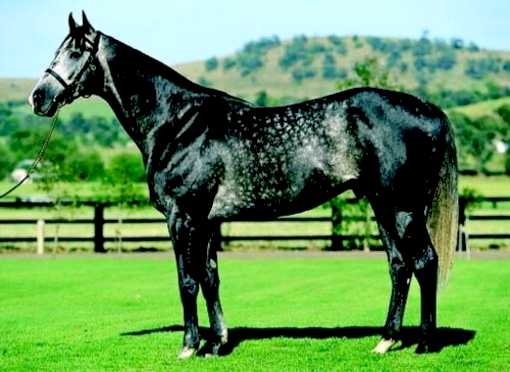
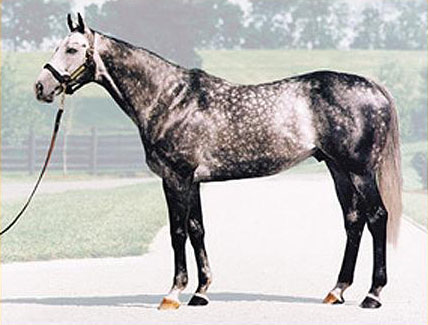
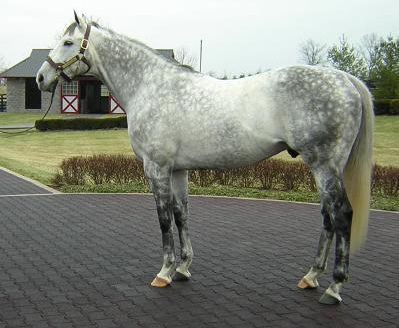
Every year when the Derby rolls around, the racing pundits like to comment about how Winning Colors is the only roan to have ever won the Derby. They are dead wrong. No roan horse has ever won the Derby because roan did not exist in the Thoroughbred gene pool until 1992, and only 6 true roan TBs exist, all of them descended from a stallion named Catch A Bird (more on that later). Winning Colors is a grey, just like Giacomo, Monarchos, Silver Charm, Gato Del Sol, Spectacular Bid, Decidedly, and Determine. Before we go any farther, let's examine the differences, both genetic and in physical appearance, between grey and roan. GREY: Grey is a dominant gene meaning that if it is present in a horse's genetic make-up, it will be expressed in the coat. This also means that every grey horse will have at least one grey parent. The color can therefore be traced back through the pedigree by following the direct line of grey horses to the earliest known ancestors of the horse. The grey gene is a color modifier rather than a simple color like black or chestnut. All grey horses are born as their base color, be it bay, chestnut, or palomino. Most will have hints of the grey gene being present at birth in the form of grey rings or "goggles" around their eyes. As they age, their coat will slowly lighten and dapple and eventually turn almost white in old age. Horses grey out at different rates. Some are nearly white by age three; others don't reach that point til they are into their teens. Pictured below is Unbridled's Song at three points in his life, showing how the grey gene changes a horse's coat as it ages. |
 |
 |
 |
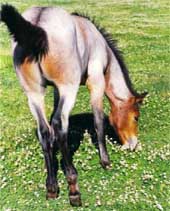
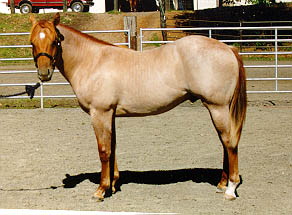
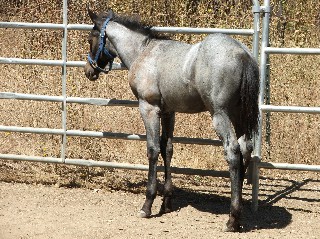
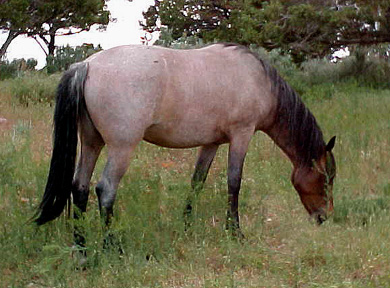
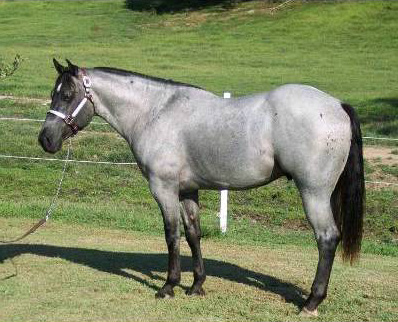
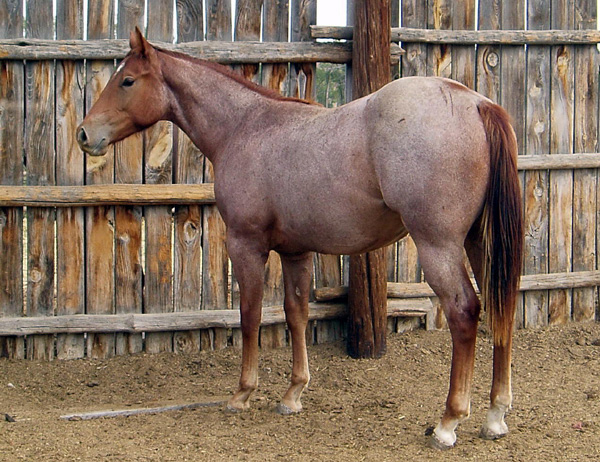
| ROAN: Roan is also a dominant gene (most horse color genes are), meaning that if it is present in a horse's genetic make-up, it will be expressed in the coat. This means that every roan horse will have at least one roan parent. The color can therefore be traced back through the pedigree by following the direct line of roan horses to the earliest known ancestors of the horse. The roan gene creates a pattern of white hairs that are sprinkled throughout the horse's coat except on the head, legs, mane, and tail. Roan horses are born looking roan and remain this color throughout their lives. See the pix below for examples of roans. From left column to right column, a bay roan shown as a foal and as an adult, a chestnut roan foal and adult, and a black roan foal and adult. |
 |
 |
 |
 |
|
 |
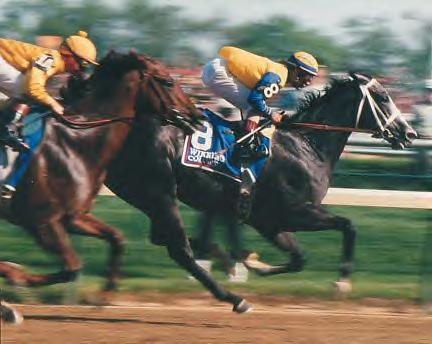
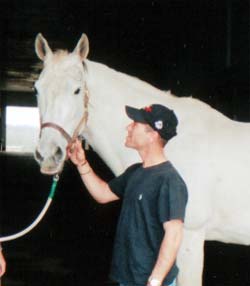
| So now that the difference between grey and roan is clear, let's have a look at Winning Colors. Here she is pictured at age three winning the Derby (left) and in old age (right). It's obvious that she is in fact a grey. |
 |
 |
|
So where does the confusion between grey and roan in the TB breed come from? From the American Jockey Club. Here is their definition of the two colors: "Gray: The majority of the coat of the horse is a mixture of black and white hairs. The mane, tail and legs may be either black or gray, unless white markings are present. Roan: The majority of the coat of the horse is a mixture of red and white hairs or brown and white hairs. The mane, tail and legs may be black, chestnut or roan, unless white markings are present." What that means in a nutshell is that the JC terms black-based greys to be greys and bay- or chestnut-based greys to be roans. It's a matter of semantics, technically, but it's confusing to those not familiar with color genetics. Most people understand there is a definite genetic and physical difference between grey and roan. The JC is happy just to lump them together despite the obvious difference. |
| *The Catch A Bird Exception: The only exception to the statement that there are no true, dark-headed roan TBs has cropped up very recently. In 1982, a very unusually marked Thoroughbred was born in New Zealand named Catch A Bird. He looks like a bay horse with white brindling, the opposite of the dark lines seen on "normal" brindles. Stranger still, as a stallion, Catch A Bird produced four offspring that appeared to be true, dark-headed roans, indicating that Catch A Bird carries a one-time KIT-mutation that has produced roan. His four roan offspring are: Odd Colours (1992 mare), Slip Catch (1993 mare), Goldhill Park (1994 horse), and Red Noble (1996 gelding). Only Slip Catch has been bred, and she has produced two roan foals, Lavender Fields and Lilac Hill. All three have tested positive for roan. Slip Catch and her foals were rescued from terrible neglect by Winning Colors Farm in Australia where their rare color is being preserved and promoted. Please note that these six horses appear to be the only true roan TBs in existence. All other horses registered as roan or grey/roan worldwide are actually greys. For pictures, please see my page on Roan Thoroughbreds: A New Mutation. |
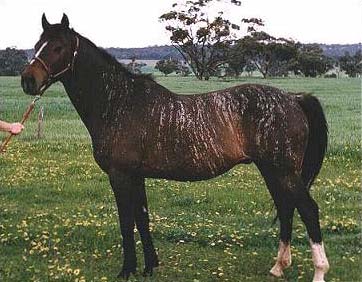 |
Pictured at left is Catch A Bird, who looks like a brindle, except with white striping instead of dark striping. With regular brindles, the dark stripes are caused by the sooty hairs in the coat being arranged into lines, rather than being randomly scattered. Catch A Bird's color was most likely the result of skewed rabicano caused by a one-time mutation. Because CAB's color was the result of a mutation, it was not hereditable. But because of the close genetic relationship of several white patterns, including rabicano and roan, the mutation manifested itself in the ability to pass on a variation of roan to his offspring which has proved hereritable. |