The Dilution Genes
Cream, Dun, Silver Dapple, Champagne, Pearl
|
Many horse colors are the result of dilution genes acting on the base colors. As the name suggests, they all work similarly by diluting the coat color. Some of the dilution genes act on both red and black pigment, some of them act only on one or the other, and some affect both but act more strongly on one either red or black. Most of the dilution genes found in horses are dominant, so if a horse carries one of these genes, it will be expressed. |
|
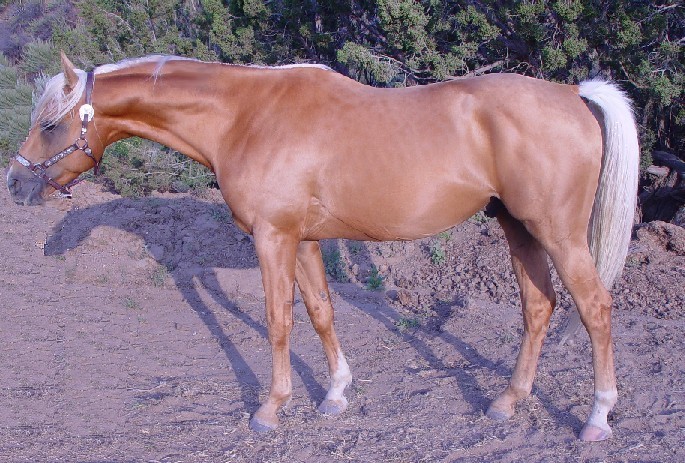
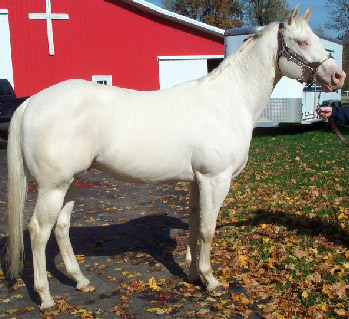
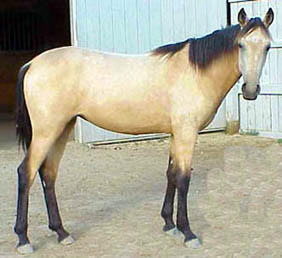
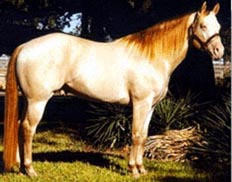
Cream: Cream can modify any color it acts in conjunction with, though it is most commonly recognized when combined with chestnut and bay. The cream gene is an incomplete dominant, meaning it is always expressed when it's present, but it acts differently in its heterozygous (1 copy of the gene) and homozygous (2 copies of the gene) states. Simply put, horses with one copy of the cream gene will have a diluted coat; horses with 2 copies will have a doubly diluted coat. Double dilutes always have blue eyes. The cream gene has very little noticeable effect on black hairs in its single form, but it is very obvious in its double form. |
|
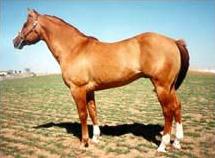
Palomino: Chestnut + 1 Cream gene |
Cremello: Chestnut + 2 Cream genes |
|
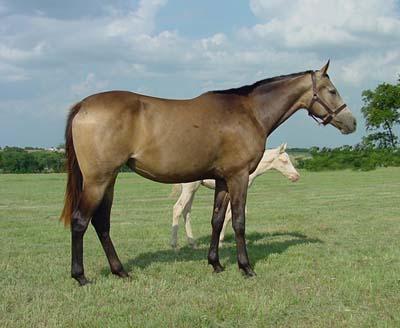
Buckskin: Bay + 1 Cream gene |
Perlino: Bay + 2 Cream genes |
|
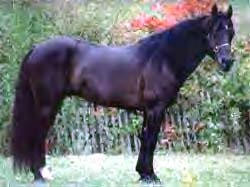
Smoky Black: Black + 1 Cream gene |
Smoky Cream: Black + 2 Cream genes |
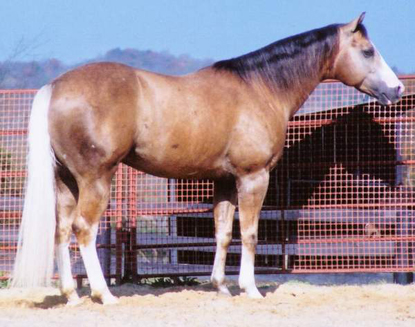 When sooty is present along with the cream gene, it can do strange things to the horse's coat. Chex Nu Jewel, a palomino Quarter Horse stallion, has most of his sooty coloration concentrated in his mane. (Photo by McBride Quarter Horses.) |
|
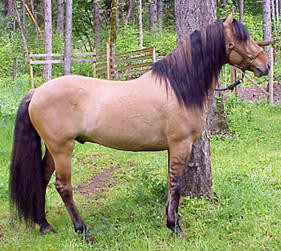
| Dun: The dun gene is a complete dominant meaning heterozygous and homozygous duns look the same. It is often considered a "primitive" color because most very ancient breeds are predominantly or entirely dun, i.e. Przewalskis, Tarpans, etc, so it stands to reason it's a very early mutation. Duns are characterized by certain markings known as dun factors. They usually consist of a distinct dorsal (or eel) stripe down the back, leg barring (or zebra stripes), and cobwebbing on the face. |
|
Red Dun: Chestnut + Dun |
Bay Dun: Bay + Dun |
Black (or Brown) Dun: Black (or Brown) + Dun |
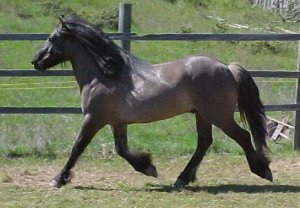
| Silver Dapple: Silver dapple (also called taffy) is a dilution gene that only affects black pigment, not red (chestnut) pigment. It acts by changing black or brown horses to a chocolatey color (sometimes dappled) and bays to a flat reddish color. (The dappling is unrelated to that caused by the grey gene.) While the legs are often only slightly affected by the silver dapple gene, the mane and tail usually change to a pale, flaxen color. Because of this, flaxen chestnuts are easily confused with silver dapple horses (and vice versa). This color is found primarily in gaited, stock, and some pony breeds such as Rocky Mountain Horses, Quarter Horses, Icelandics, Shetland Ponies, and Miniature Horses. A few draft breeds have also recently been discovered to carry silver, but it's quite rare. |
|
|
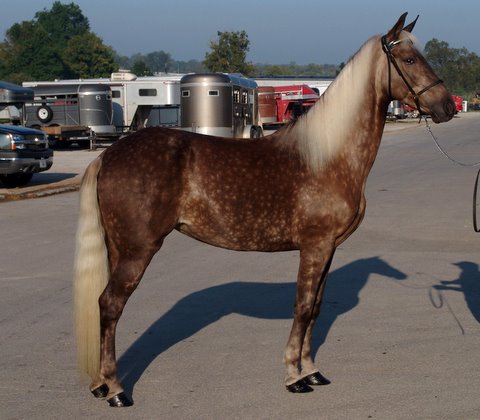 This is Smooth As Silk, a Rocky Mountain horse owned by Fair Chance Stables exhibiting the dappled chocolate shade of silver black. |
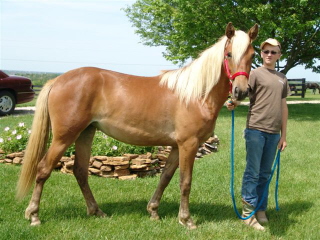 This is April Sunshine, a light silver dapple bay Rocky Mountain Horse owned by Overlook Stables. |
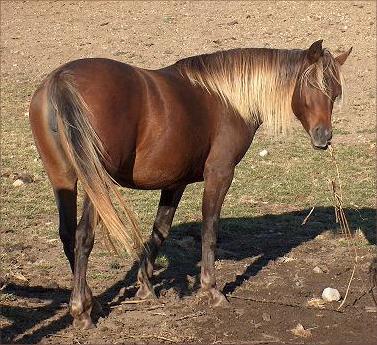 This is Amaretto Blu, a darker silver dapple bay Morab. The manes and tails of silver dapple horses often darken as they age, but they generally do retain flaxen tips. (Bred, owned, and photographed by Tamar's Ventures.) |
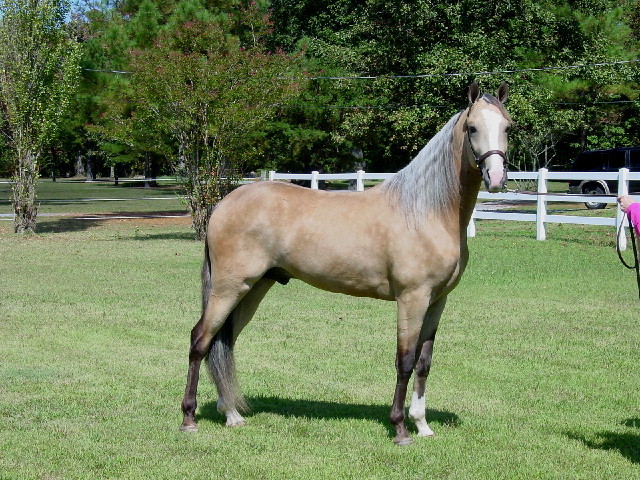 This horse is believed to be a silver dapple buckskin: bay + cream + silver dapple. (If anyone knows the identity of this horse, please email me. I'd love to know more about him.) |
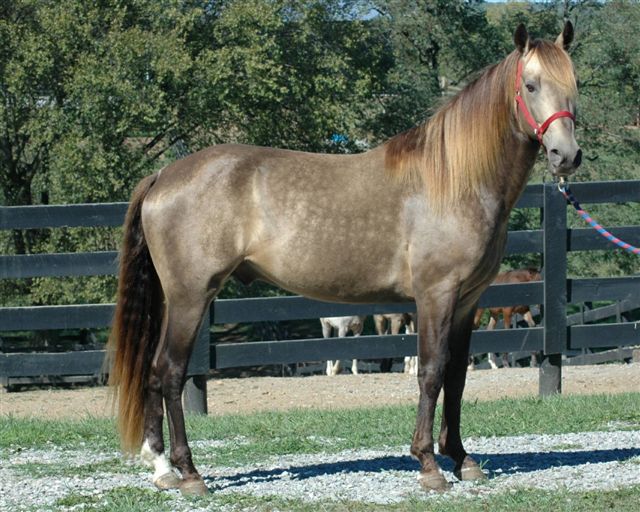 This is Choco Dock Jr, a silver dapple sooty buckskin RMH. He is owned by Alloway Creek Farms. (Photo by Jane Gean) |
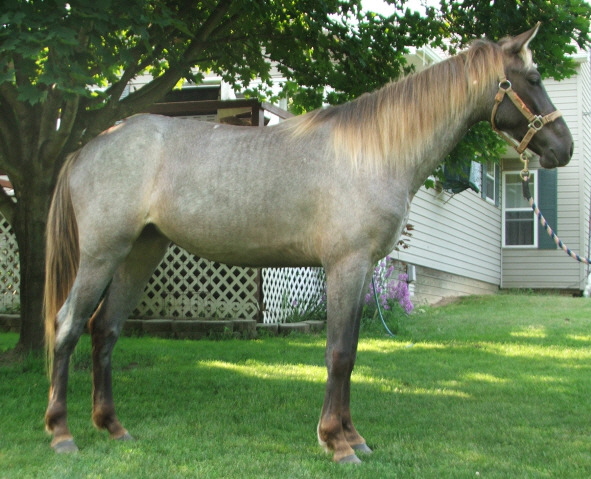 This stunner is the aptly named Chocolate Roan, a roan silver dapple black RMH owned by Volz's Mountain Horses. (Photo by Christi Volz) |
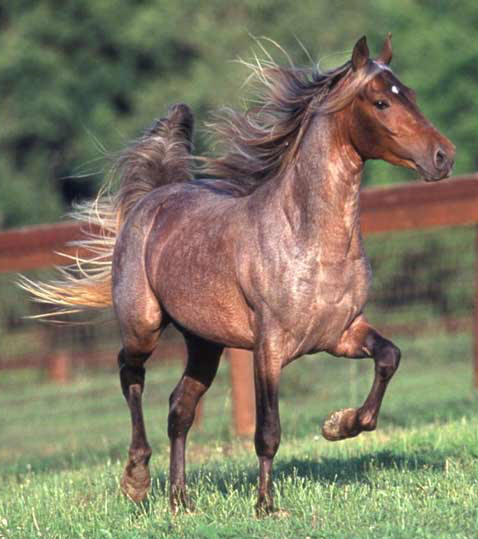 This is Classic's Shogun, a roan silver dapple bay RMH. He is also owned by Volz's Mountain Horses. |
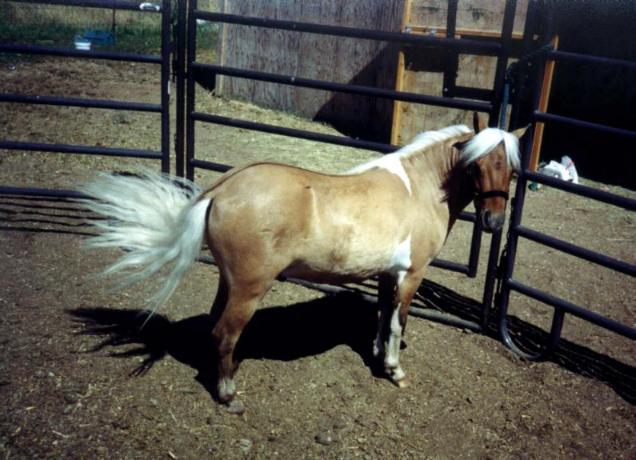 This little cutie is a bay dun silver dapple: bay + dun + silver dapple. (He's also a tobiano pinto.) |
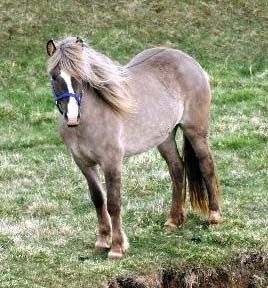 This Icelandic Pony is a black dun silver dapple: black + dun + silver dapple. (Photo by Chantal Jonkergouw) |
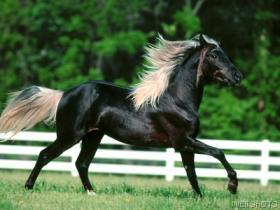
| Champagne: The champagne gene is a simple dominant dilution gene, much like dun. In other words, if a horse carries the champagne gene, he will be champagne in color. Champagne combined with chestnut is called "gold," with bay is "amber," with brown is "sable," and with black is "classic." Sometimes, champagne is combined with the cream gene as well, producing a color known as "ivory." It is known to act in conjunction with other dilution genes (i.e. dun), but those colors have yet to be named. Champagne horses are usually born with bright pink skin that becomes freckled as they age. They are also born with blue eyes that change to a hazel shade as they get older. The champagne gene is found most often in Tennessee Walking Horses, Missouri Foxtrotters, American Saddlebreds, and Quarter Horses. The best resource for more information and pictures of champagne horses is the Champagne Horse Association. |
|
Gold Champagne: Chestnut + Champagne |
Gold Ivory Champagne: Chestnut + Champagne + Cream |
|
Amber Champagne: Bay + Champagne |
Amber Ivory Champagne: Bay + Champagne + Cream |
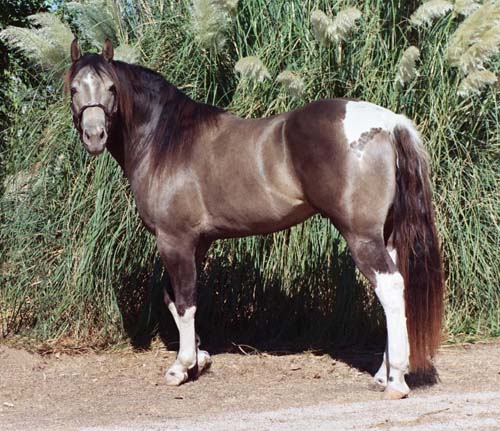 Sable Champagne: Brown + Champagne The brown color is diluted to a mousie grey-brown shade with darker points, very similar to classic champagne. (This is California Champagne, a Paint Stallion owned by Carolyn Shephard.) |
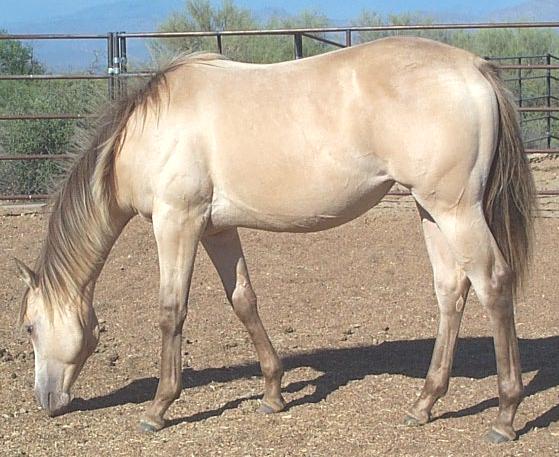 Sable Ivory Champagne: Brown + Champagne + Cream The brown color is diluted to a pale golden-brown shade with darker points, very similar to silver bucksin. It is of course distinguishable by the hazel eyes and freckled skin. (This is Kya, a QH owned by Tara Novotnoy.) |
|
Classic Champagne: Black + Champagne |
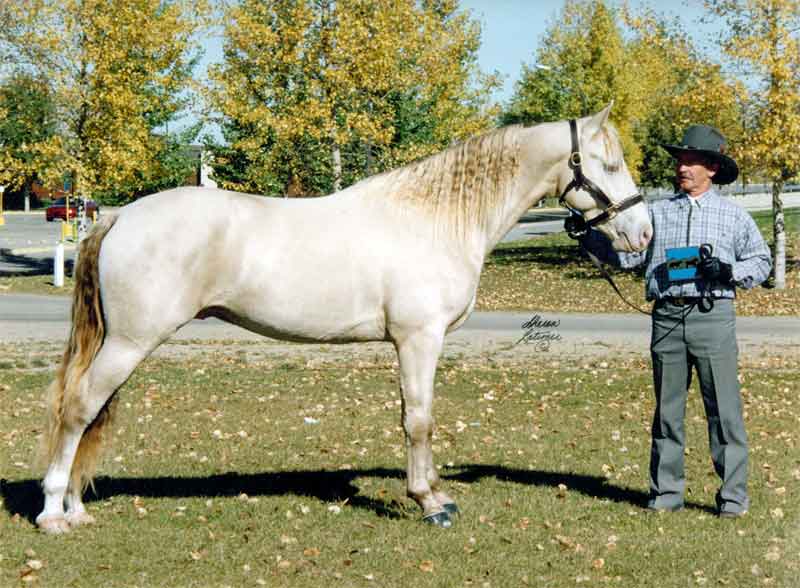 Classic Ivory Champagne: Black + Champagne + Cream The black color is diluted to a pale silvery grey-brown shade with slightly darker points. Just like the gold and amber champagnes, classic horses have the telltale hazel eyes and freckled skin. (This is Topaz Merry Go, a TWH stallion owned by Bill Howes.) |
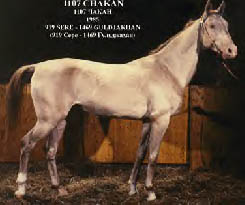
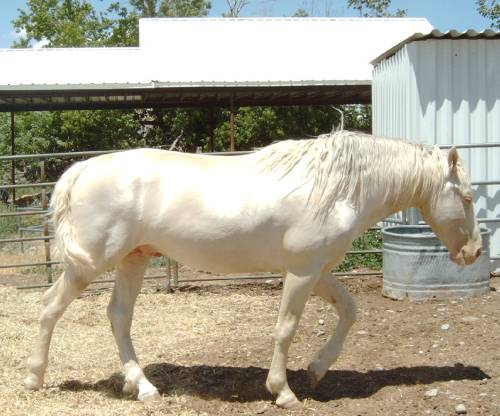 Double Cream Ivory Champagne: Any Base Color + Champagne + Cream + Cream Champagne combined with cremello, perlino, or smoky cream creates an irridescent, nearly white coat. These horses have very pale skin and very faint freckling. |
|
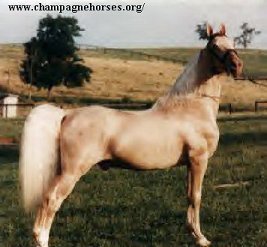
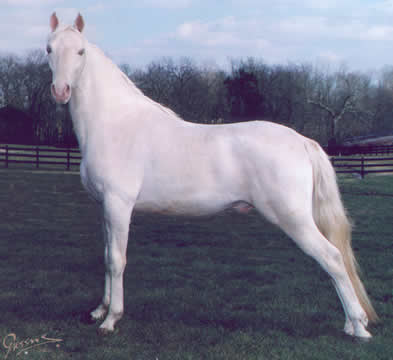
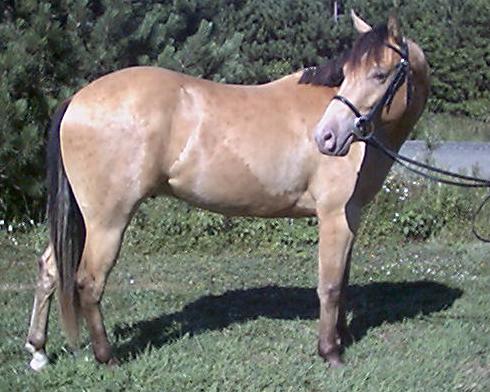
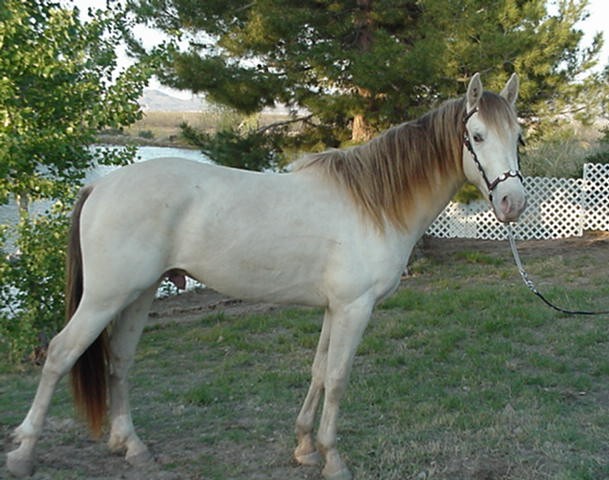
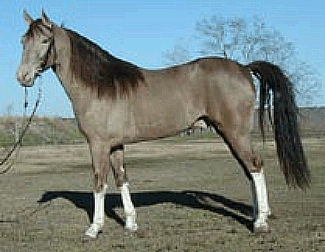
| Pearl: The pearl gene (formerly known as the Barlink or apricot gene) is a fairly recently discovered recessive, cream activated dilution. Because it is recessive, one copy of the pearl gene will not affect coat color (if the cream gene is not present). Two copies of the pearl gene act similarly to a double dilute on the coat, creating colors that are akin to those of the champagne gene. The pearl gene combined with one cream gene produces horses that look very like double dilute creams (i.e. cremello, perlino, etc). For more information about this gene and pictures of pearl horses, please visit the New Dilutions website. (Photos to be added eventually---under construction.) |
 RD Chica, a chestnut carrying pearl Chestnut + Pearl |
Chestnut + Pearl + Pearl
|
Chestnut + Pearl + Cream
|
 Bravio, a bay carrying pearl Bay + Pearl |
Bay + Pearl + Pearl
|
Bay + Pearl + Cream
|
|
Black + Pearl
|
Black + Pearl + Pearl
|
Black + Pearl + Cream
|