Modifiers
Grey, Roan, Pinto, and Appaloosa
 |
 |
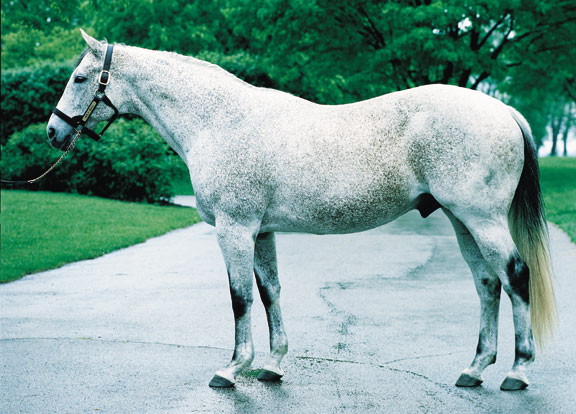 |
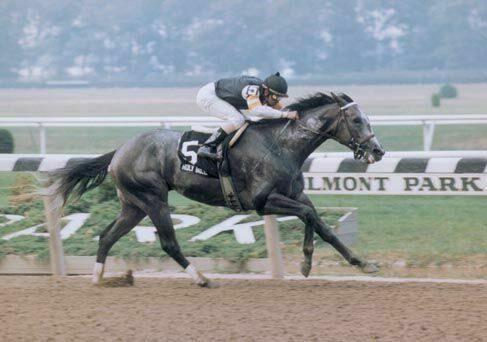
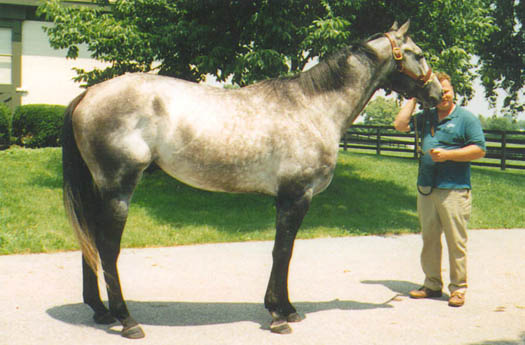
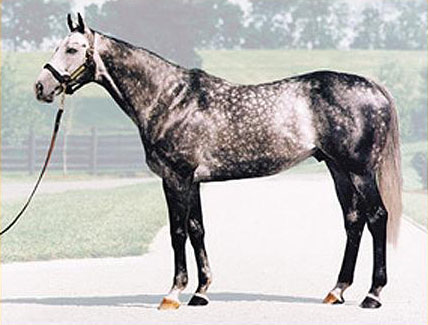
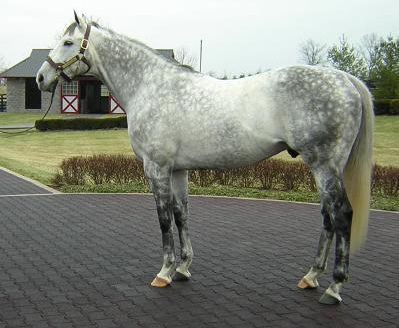
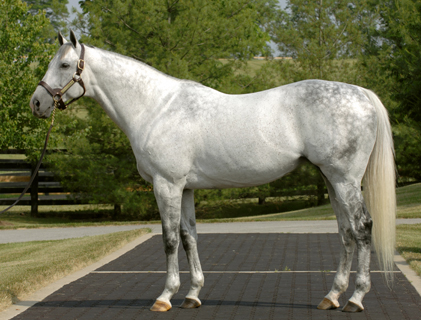
| And here is Unbridled's Song, another grey who has not developed flea bites. There has been some speculation that fleabites were the result of either heterozygous or homozygous grey, but there doesn't seem to be much evidence to support it. Both Holy Bull and Unbridled's Song are heterozygous greys. |
 |
 |
 |
 |
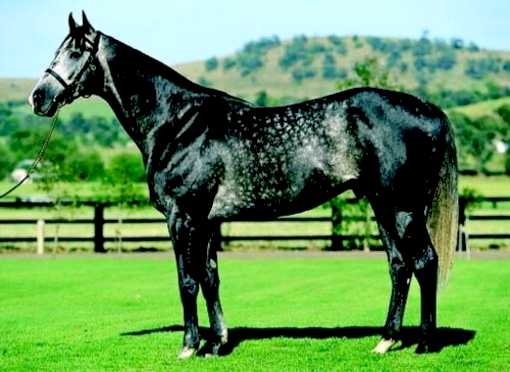
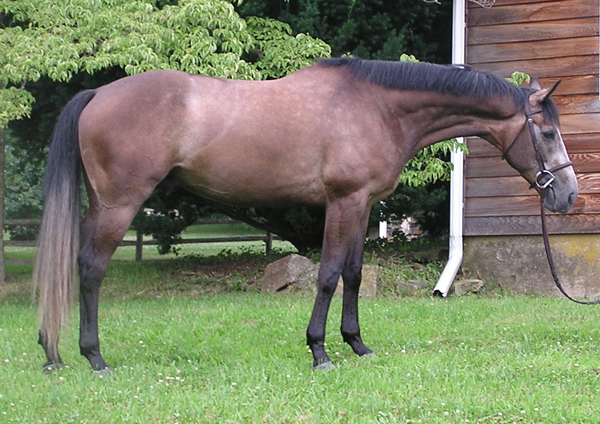 Some bay and chestnut based greys go through a phase called rose grey, like the horse above. Some rose greys dapple out and some, especially Arabians, tend to lighten up quickly without really dappling while still retaining a rosy hue. |
|
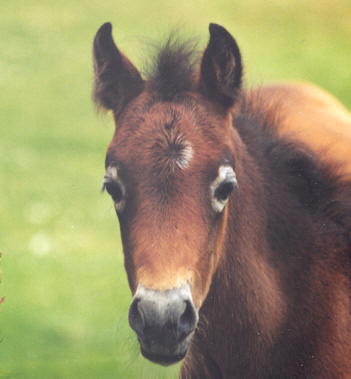
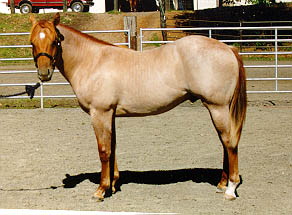
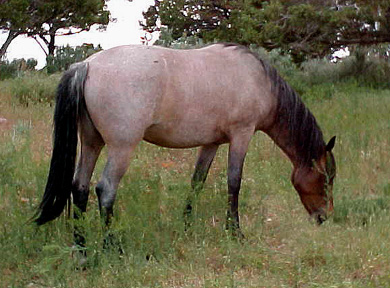
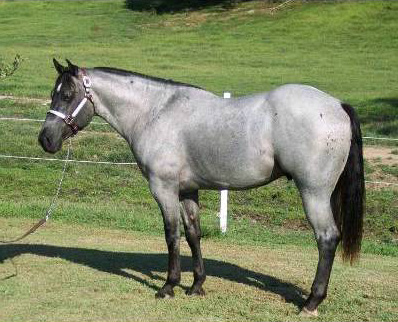
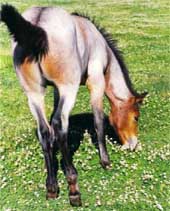
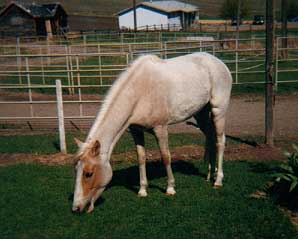
| Roan: The roan gene acts by interspersing white hairs throughout a horse's coat, but the head, legs, mane, and tail remain "dark." Roan can act on any of the base colors as well as on any dilute or patterned color. For example, you could have a red roan (chestnut + roan), a strawberry roan (bay + roan), a blue roan (black + roan), or even a palomino roan (chestnut + cream + roan). Roan is often confused with grey, but it should be noted that roan horses look the same throughout their lives while grey horses fade out to nearly white (as seen above). |
|
Chestnut Roan: Chestnut + Roan |
Bay Roan: Bay + Roan |
Black Roan: Black + Roan |
|
A bay roan foal. Notice how his head and points are dark right from birth. |
A palomino roan (chestnut + cream + roan). Even with 2 different dilution genes at work, this horse's head and knees retain traces of the dark palomino color. |
|
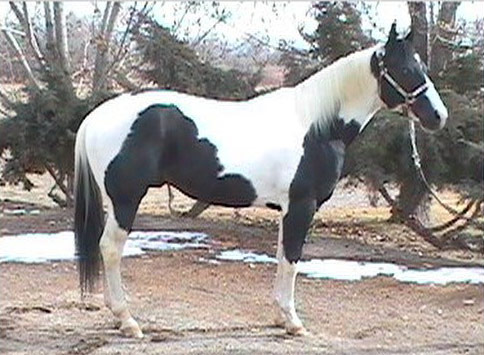
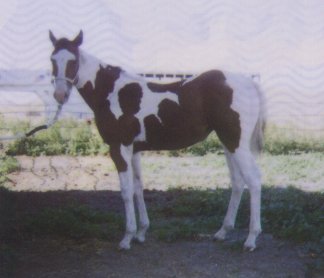
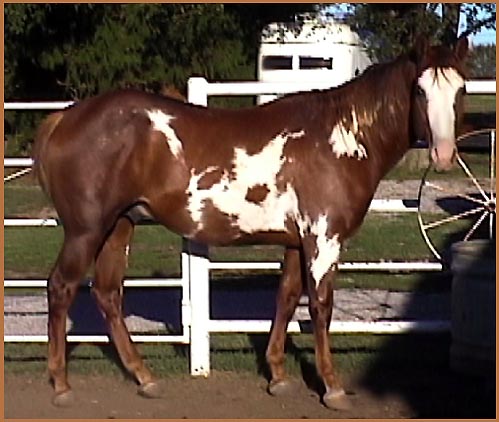
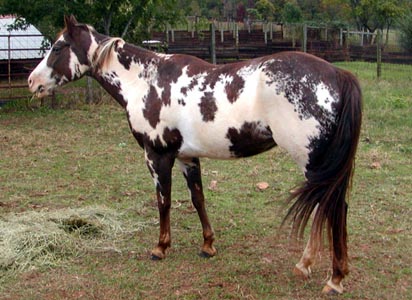
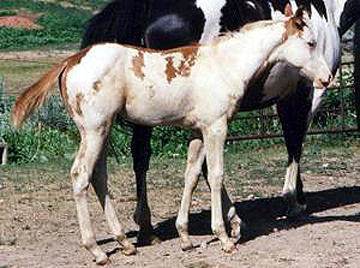
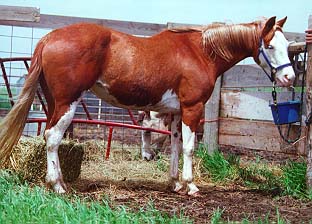
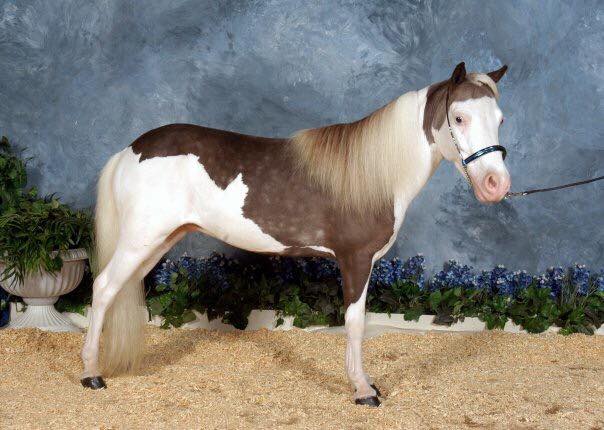
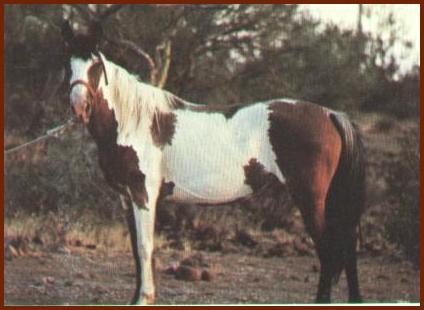
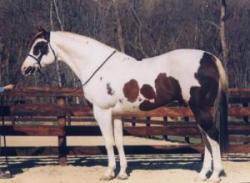
Pinto Patterns: Pinto is a term that refers to several different patterns of white. The patterns fall into two catagories, tobianos and overos. The overo catagory is really just a catch-all for non-tobiano patterns that includes frame overo, sabino, dominant white/white spotted, splash white, and manchado. A horse with a combination of tobiano and one or more overo patterns is known as a tovero. The tobiano pattern is dominant, and it is characterized by white crossing the horse's topline, as well as by areas of color on the head, chest, and flanks. Most tobianos have normal face markings like stars and blazes, and they almost always have four white feet. Some minimally marked tobianos appear to have only 4 stockings and no other discernable white markings. Frame overos are characterized by having a predominantly dark topline with blocks of white on their sides and necks. Frame overos usually have large blazes or apron markings.The feet are usually dark, but may be white if combined with other pinto patterns, particularly sabino. The frame gene is responsible for "lethal white overo." Horses that are homozygous for the pattern (2 copies) die shortly after birth. Heterozygous frames are perfectly viable. (See below.) Sabino is a pattern that comes in many forms. In its minimal form, it may manifests itself as simple socks and a blaze. More extreme sabinos will have white patches, often with roaned edges, creeping up their sides from the underside of the belly. The most extreme sabinos will look entirely white or nearly so, often retaining a few patches of color along their toplines, particularly on the ears or in the mane. Dominant White (also called white spotting) is a pattern that was for a long time thought to be part of the sabino gene complex. Like sabino, the amount of white on the coat can vary, though most dominant white horses tend to be heavily patterned or nearly all white. Interestingly, the pattern is usually the result of a spontaneous mutation of the KIT-gene, so loudly marked foals can result from otherwise plain parents. More than 20 white spotting W-mutations have been identified so far in various breed. With some of these mutations, horses that are homozygous for the pattern may be more dramatically marked. Splash white horses look as if they've literally been splashed with or dipped in white paint from the underside. Splash white is an incomplete dominant. Homozygous spashes will have more white than heterozygous splashes. Splash markings tend to have smooth, crisp edges, and most splashes have blue eyes (especially the homozygous ones). Most pinto patterns can range from minimal expressions (a nearly solid colored horse) to extreme expression (an all-white or nearly all-white horse). White horses resulting from tovero and sabino patterns are completely viable. White horses that are homozygous for frame overo, however, are known as lethal white overos (LWO). For more information on lethal white, please read my page about white horses. |
Tobiano
|
|
|
|
|
|
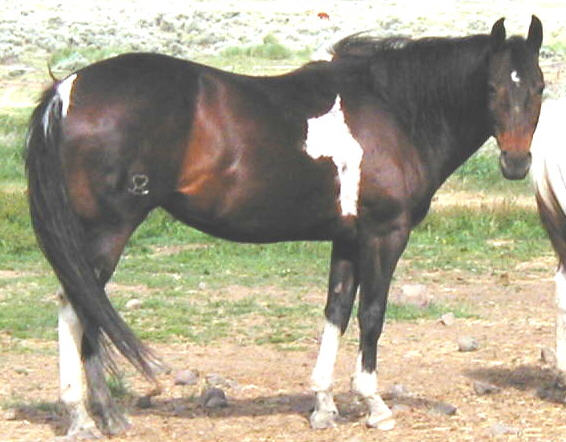
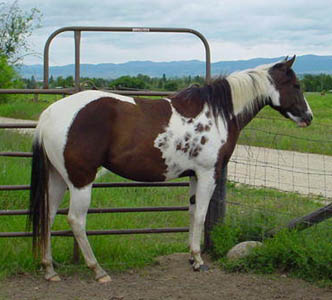 This is The Eagle's Gift, a lovely tobiano Paint mare who exhibits cat tracks, the small spots on her shoulder. Cat tracks are often somewhat roany looking and are typical of homozygous tobianos. (Bred and photographed by Spotted Fawn Paints) |
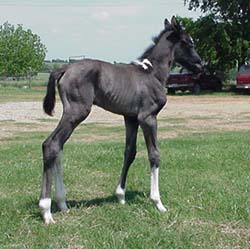
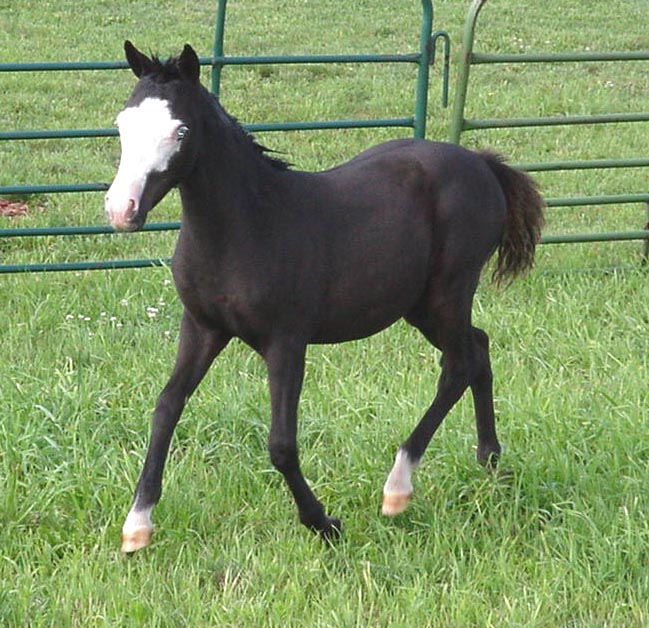
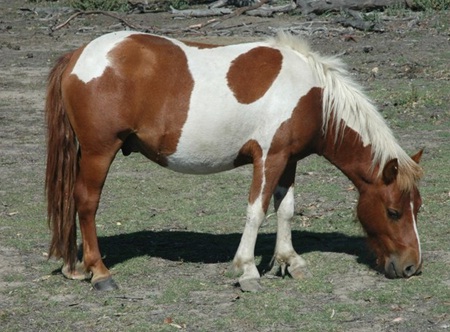 As I mentioned above, nearly all tobianos have 4 white feet. Occassionally, the pattern gets skewed, resulting in tobianos with dark feet like this guy. These skewed patterns and dark feet seem to be found most often in Miniature Horses and Shetland Ponies. |
Frame Overo
|
|
|
|
|
|
Sabino
|
|
|
|
|
|
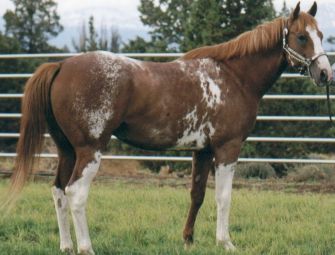
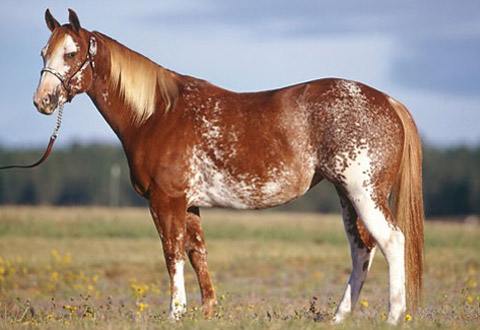
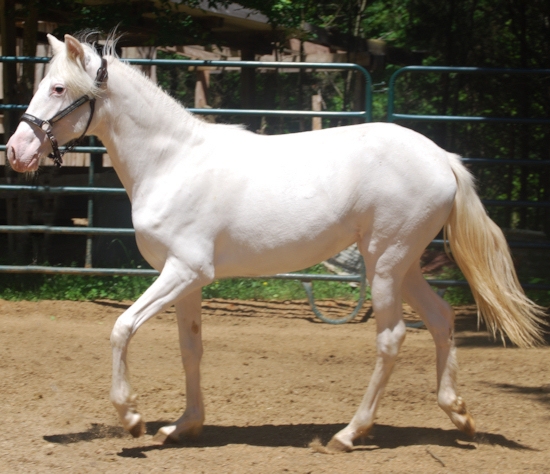
Dominant White/White Spotting
|
|
|
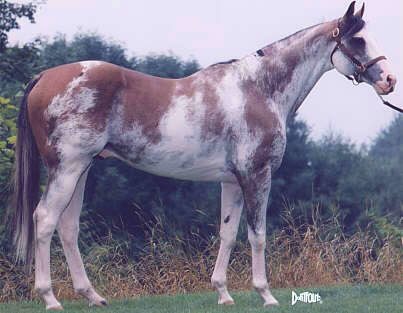
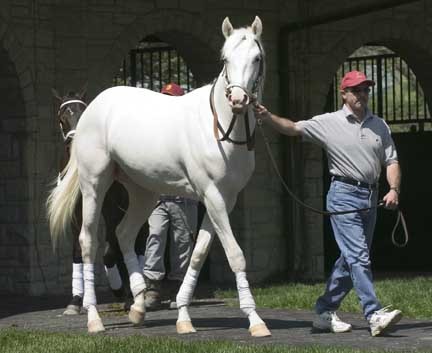
Splash White
|
|
|
|
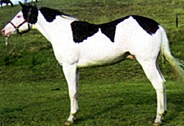 A more extremely marked splash white. Definitely a homozygous splash.
|
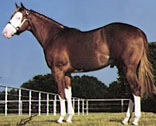
Tovero
|
|
|
|
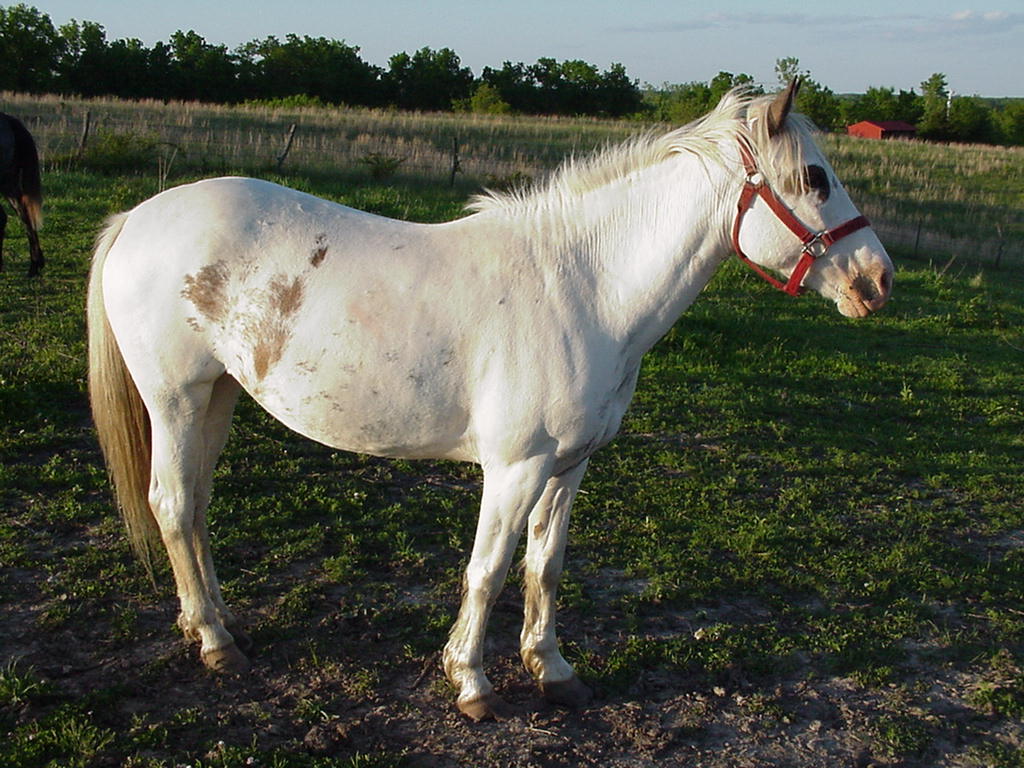
| Appaloosa: The wild spotting pattern typified by the Appaloosa breed is caused by a group of genes called the leopard complex (Lp). The pattern can be manifested in several ways: varnish, blanket, leopard, snowcap, and few spot. Horses who are heterozygous (Lplp) for the leopard complex will exhibit the varnish, blanket, or leopard patterns. Horses who are homozygous (LpLp) for the leopard complex will exhibit the snowcap or few spot patterns. According to recent studies, the appaloosa pattern in it's heterozygous state seems to manifest itself similarly to the pinto genes. Moderately expressed appies will have a small blanket, more boldly marked horses will have larger blankets, and the most boldly patterned horses are entirely covered by the blanket, meaning they are leopard appaloosas. For more information on the ongoing project of mapping the appaloosa genome, please check out The Appaloosa Project. Appaloosa pattered horses also have distinct markings besides their spots---they have striped hooves, mottled skin, and white sclera. |
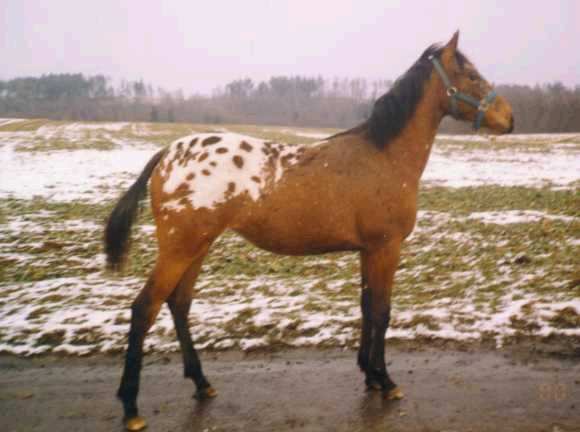 A small blanket. |
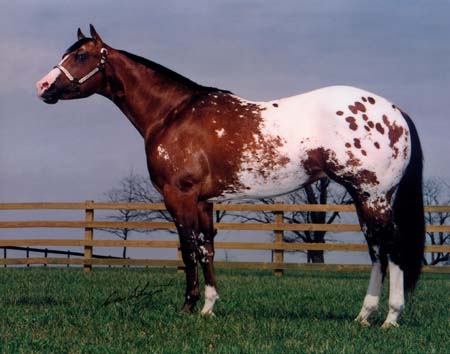 A larger blanket. |
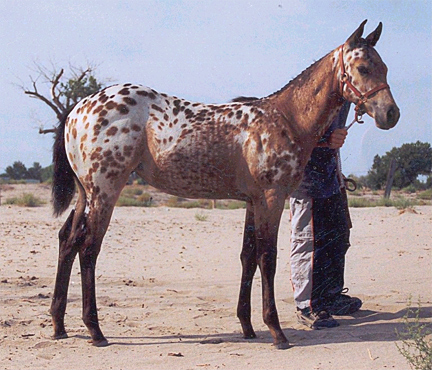 A larger blanket, sometimes called semi-leopard. |
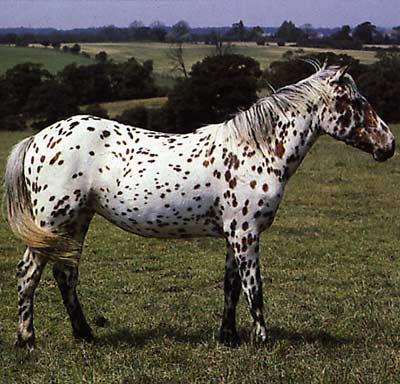 A leopard appaloosa. |
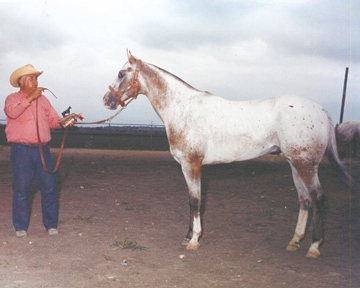 Dudes Bonanza, a varnish roan appaloosa. |
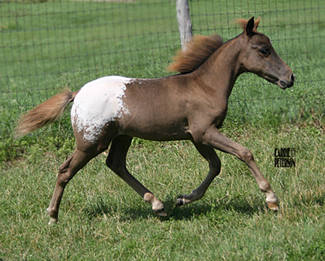 MTF Legacy's Red Baron, a snowcap with a small blanket. Notice the complete lack of spots, signifying his homozygosity. |
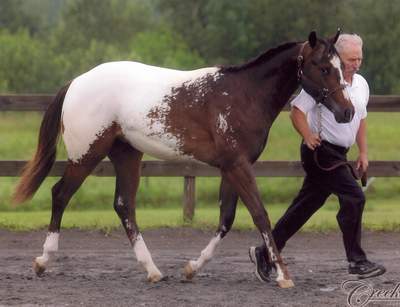 Ima Starr Dancer, a snowcap with a larger blanket. Notice the complete lack of spots, signifying his homozygosity. |
 |
 |
 |